
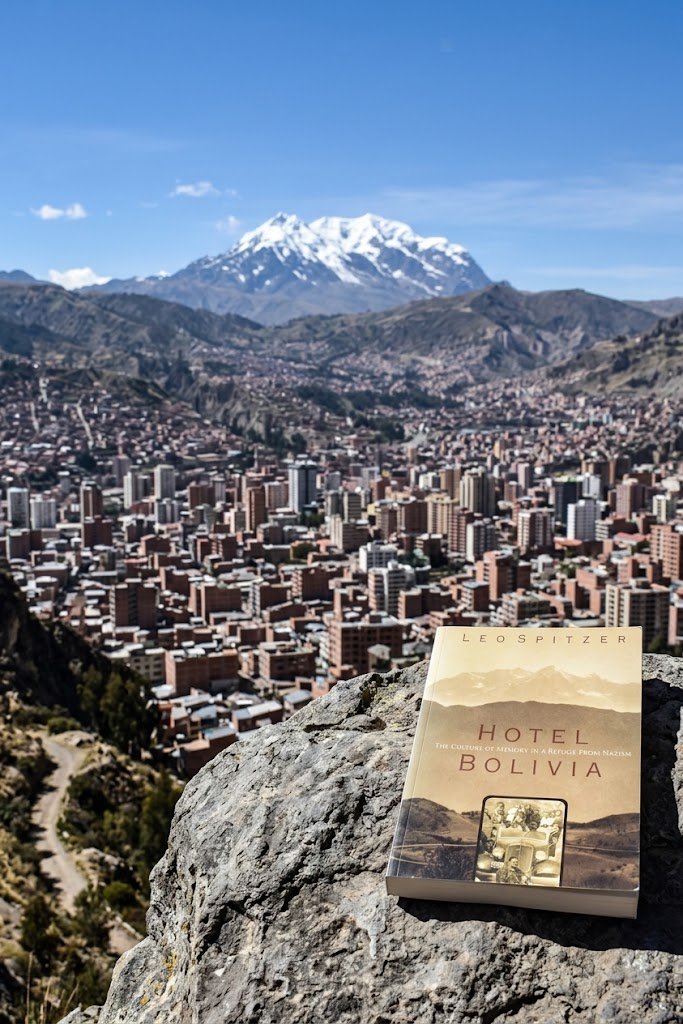
Sanctuary in the Clouds: The Overlooked Story of ‘Hotel Bolivia’
In the late 1930s, as dark clouds gathered over Nazi-dominated Europe, doors across the globe were slammed shut to those seeking safety. Yet high in the Andes mountains, an unexpected sanctuary emerged. Between 1938 and 1945, Bolivia became one of the very few nations to grant refuge to Central European Jews. Over 20,000 refugees made the journey to this rugged, unfamiliar land to rebuild their lives from scratch.
In Hotel Bolivia: The Culture of Memory in a Refuge from Nazism, historian Leo Spitzer—who fled Vienna as a child with his family and spent nearly a decade in La Paz—delivers a deeply moving and meticulously researched exploration of this overlooked chapter of WWII history.
🏔️ Life Above the Clouds: Exile & Resilience
Arriving in La Paz, refugees were confronted by a world starkly different from Central Europe: an Andean landscape framed by the majestic, snow-capped peak of Mount Illimani, towering urban elevations, and a rich Indigenous culture.
Spitzer combines personal testament with sophisticated historical analysis to examine how these families managed to retain their European heritage, adapt to South American society, and navigate the tensions between memory and displacement.
📚 Why You Should Read It:
- Personal & Oral Histories: Features intimate interviews with survivors across Israel, Europe, and the Americas, bringing raw human voices to light.
- Rich Archival Imagery: Includes rare historic photographs and personal artifacts that document daily life in the Bolivian diaspora.
- A Masterclass on Memory: Explores how displaced individuals carry their “cultural baggage” across borders and make meaning out of new environments.
Part history, part deeply personal journey, Hotel Bolivia is an essential read for history enthusiasts, travel lovers, and anyone interested in stories of human resilience.
📖 Get Your Copy & Explore More