20 Years on the Ledge:
A Glimpse into the 2006 Gold Rush
The Gold Digger’s Trail (El Camino del Oro):
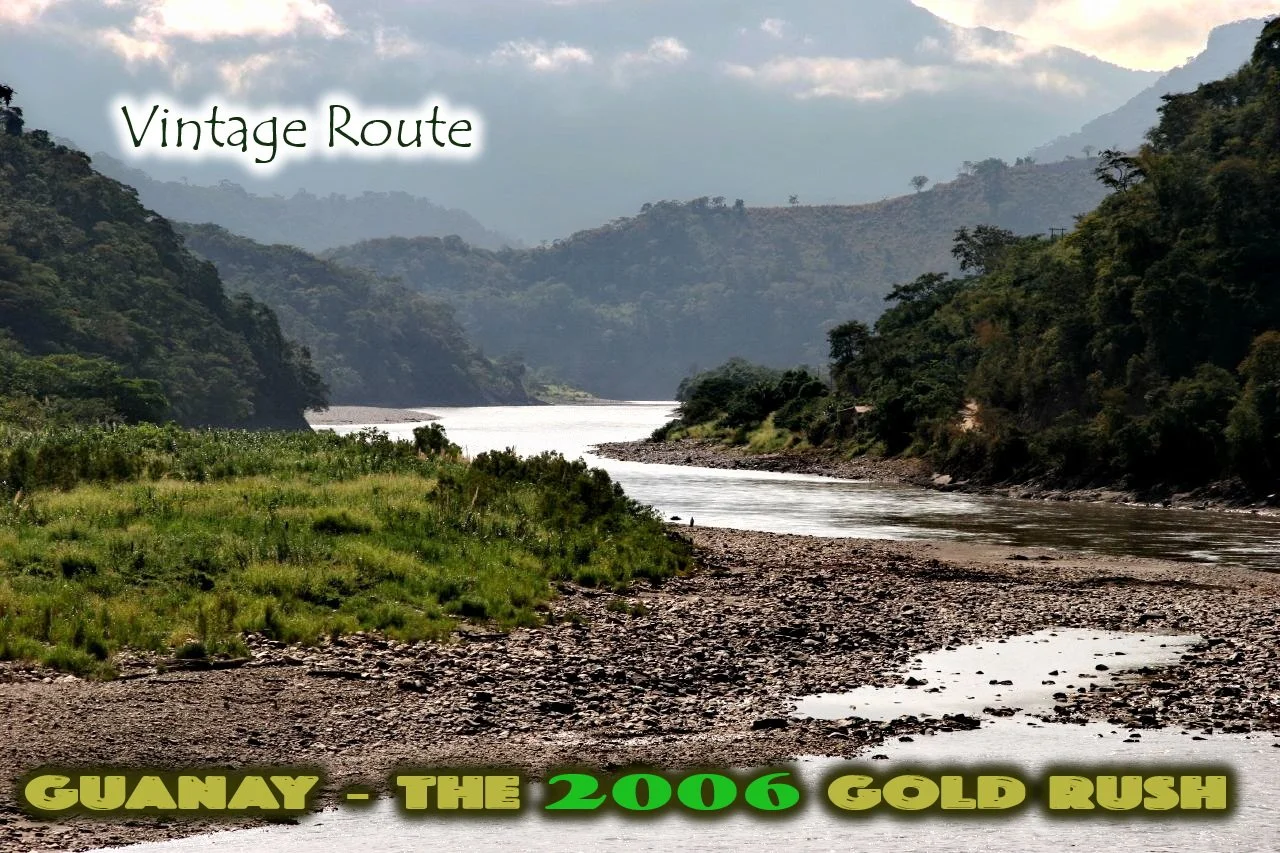
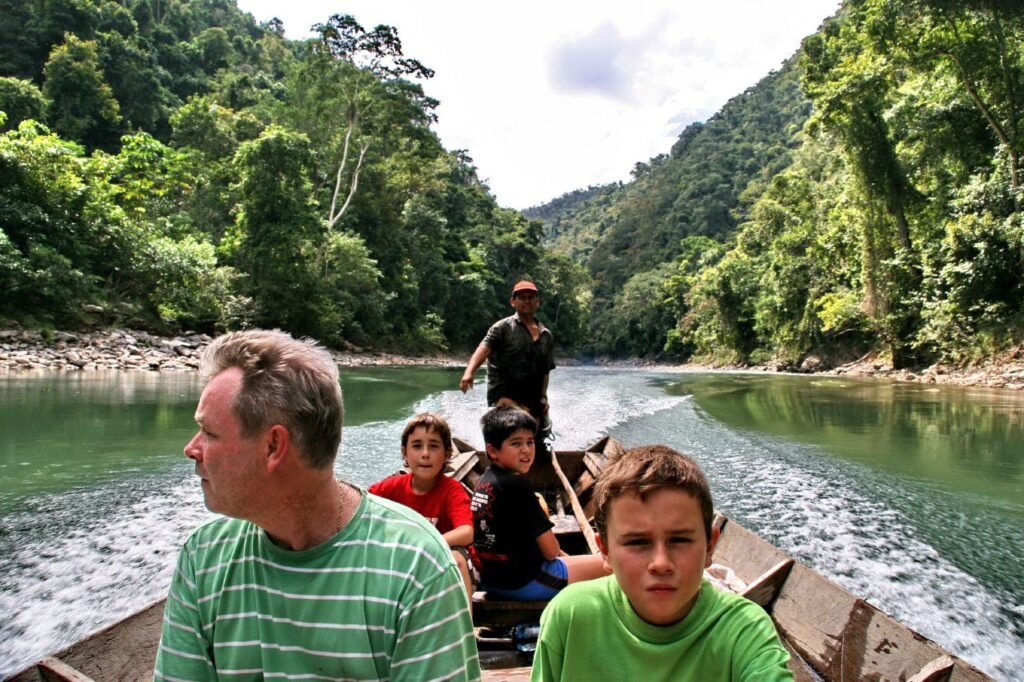
Take a trip back to 2006 with me to the mining regions of Guanay and Tipuani, Bolivia. This was a family expedition involving cable carts, river boats, and the incredible landscapes of the Yungas. These photos capture the entrance of the underground mine just months before it was closed due to a major landslide.
Full Photo Album: Explore the Guanay-Tipuani 2006 Photo Gallery on Flickr
Travel photography is often about capturing a moment in time, but every so often, those moments become historical records. Looking back at my archives from 2006, I found a series of photos that feel like they belong to a different era of the Andes. This was a time before paved highways reached deep into the Amazon basin, before GPS was in every pocket, and when the gold mining towns of Guanay and Tipuani felt like the true “Wild West” of Bolivia.
This wasn’t just a scouting mission for my blog; it was a weekend shared with good friends and family. I was joined by Thomas and his children, along with my son Michael. We set out from my home at the time — the Hotel Esmeralda in Coroico — and descended into the humid, high-stakes world of the gold rush.
Info Box
C🗺️ Planning your own Bolivian adventure? > To navigate the rugged, unpredictable terrain of the Yungas safely, securing robust coverage is step number one. Check out WayAway Flight Search & Cashback or protect your journey with comprehensive plans from EKTA Travel Insurance via Travelpayouts.
Why Choose Us
Discover the reasons that set us apart.
01
Innovation
We continuously push the boundaries of creativity to deliver innovative solutions.
02
Expertise
Our team of seasoned professionals brings unmatched expertise to every project.
03
Collaboration
We thrive on partnerships and teamwork, fostering collaborative efforts that result in groundbreaking solutions.
The Descent into Guanay
The journey from the cool, cloud-forested heights of Coroico down to Guanay is a transition of both climate and culture. As you drop in altitude, the air thickens, the vegetation turns a deeper shade of emerald, and the quiet mountain life gives way to the frantic energy of the mining districts.
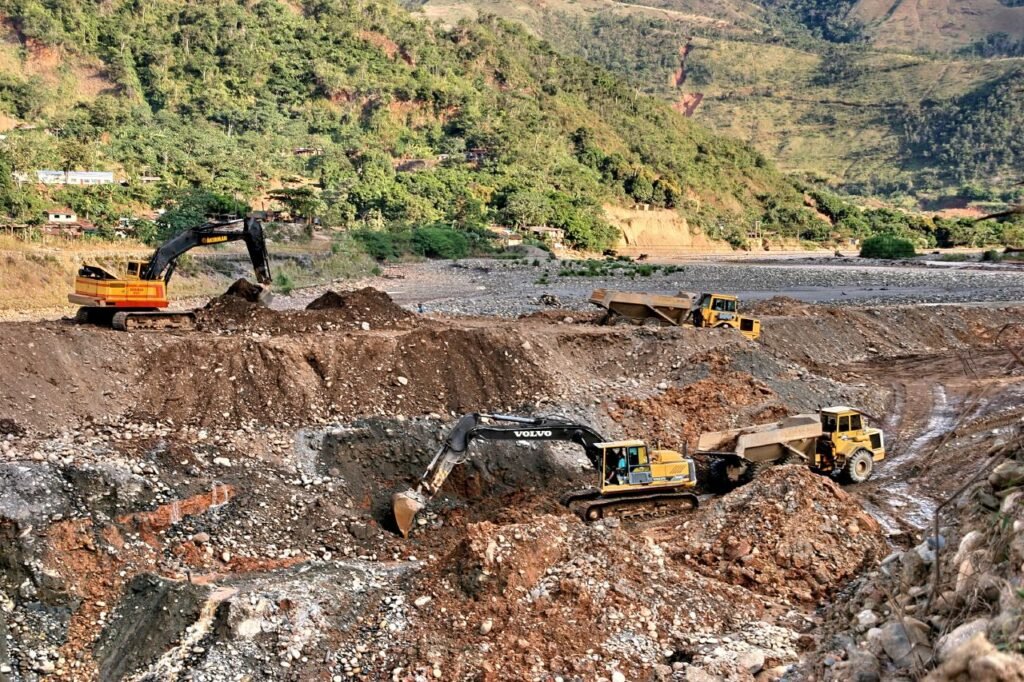
Our base for the first day was the home of Edgar Kann in Guanay. Edgar was a fixture in the local mining scene, and his hospitality provided us with a front-row seat to the industry that fuels this entire region. Guanay sits at the confluence of the Mapiri and Tipuani rivers, a strategic point where the wealth of the mountains is washed down in the form of gold dust and nuggets.
Crossing the Divide: The Canastilla
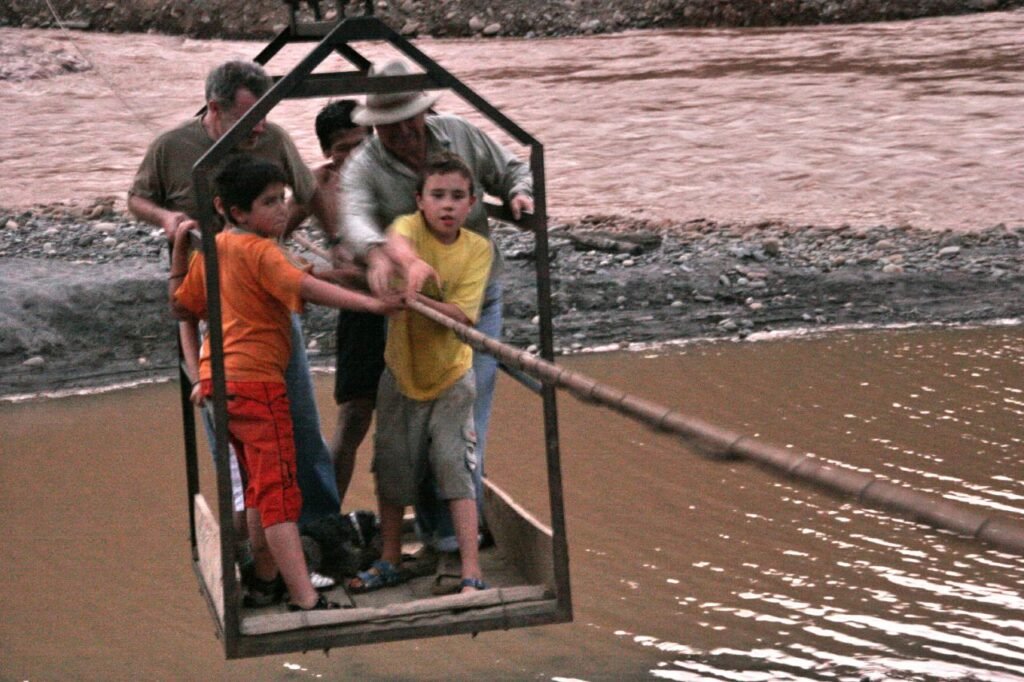
One of the most visceral memories of that first day—and a highlight for the kids—was our visit to the mining company’s site. In the Yungas, infrastructure is often a matter of necessity over elegance. To reach the site, we had to cross the river using a cable cart, or canastilla.
There is a specific kind of thrill that comes from hanging in a metal cage suspended by a steel cable, with the brownish, churning waters of the Rio Mapiri rushing beneath you. It’s a moment where you realize how much the people here rely on their own ingenuity to conquer the geography. As a photographer, the perspective from the middle of the river, suspended in mid-air, offered a unique angle of the valley that no bridge could ever provide.
After the adrenaline of the crossing, we settled in for a “hardy lunch” at a riverside patio. The architecture of the region is functional: wooden supports and metal shingle roofs. I can still remember the sound of that afternoon—the distant roar of the river and the occasional “ping” of the metal roof expanding under the relentless tropical sun. It was the perfect moment of stillness in a region that is usually defined by movement and labor.
The Ghost of the Underground Mine
Later that afternoon, we visited the entrance of a massive underground mine. At the time, it was an impressive feat of engineering, a dark maw in the side of the mountain where men sought their fortunes deep within the rock.
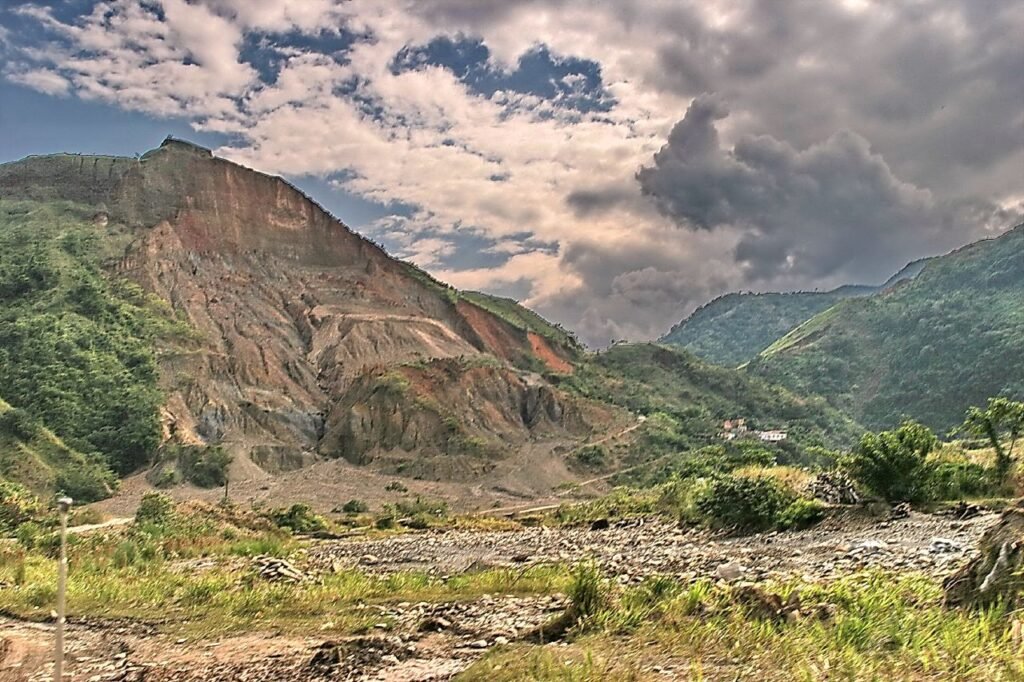
We didn’t know it then, but we were standing at the entrance of a site that was about to be reclaimed by nature. Later that same year, a massive landslide occurred a few miles upstream. The mountain literally moved, altering the course of the landscape and forcing the permanent closure of the mine. Looking at the photos in my Flickr album, you can see the entrance as it was—a gateway to the earth that no longer exists. It serves as a somber reminder of how fragile human enterprise is in the face of the Andes’ geological power.
🎒 Gear Guide & Recommended Reading
To capture these rugged river routes and keep your gear safe from the intense tropical humidity of the Yungas, here are a few absolute essentials:
Recommended Gear
Waterproof Backpack Dry Bag: When crossing rivers on canastillas or riding in open wooden canoes, keeping your camera gear dry is non-negotiable. Protect your electronics with a Durable Waterproof Dry Bag on Amazon.
Polarizing Lens Filter: To eliminate glare from muddy rushing rivers and capture the deep, emerald green of the Yungas ferns, use a Circular Polarizer Filter on Amazon.
High-DEET Insect Repellent: The humid river valleys are prime territory for persistent biting sandflies. Pack some heavy-duty Max-Strength Bug Spray on Amazon.

Your Client 1
Explore Our Creations
Up the Rio Tipuani: The Spalt and the Rapids
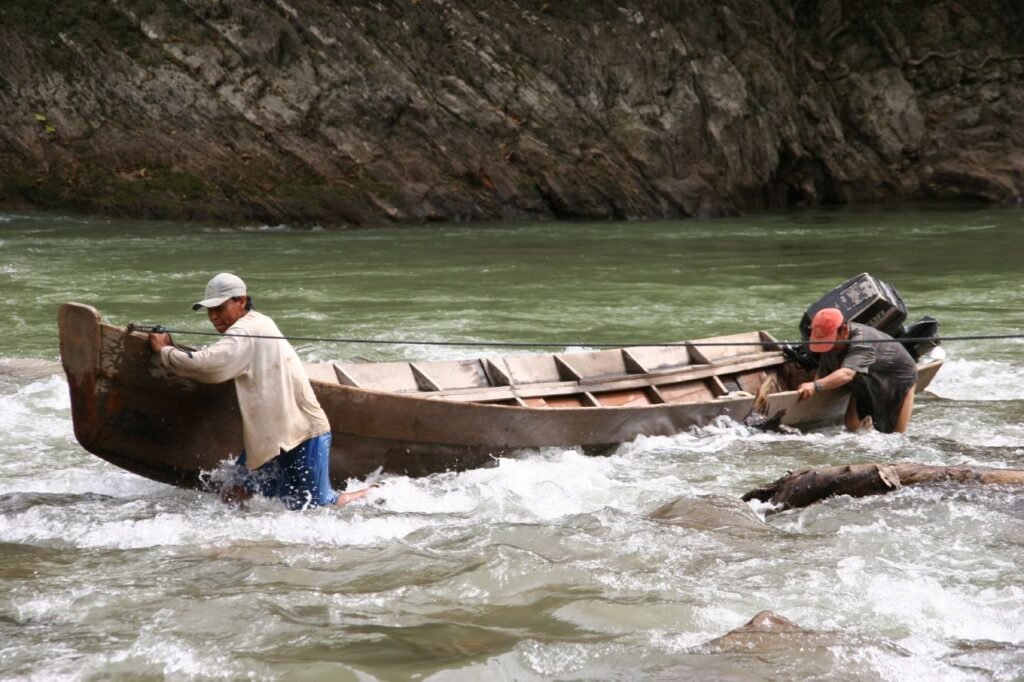
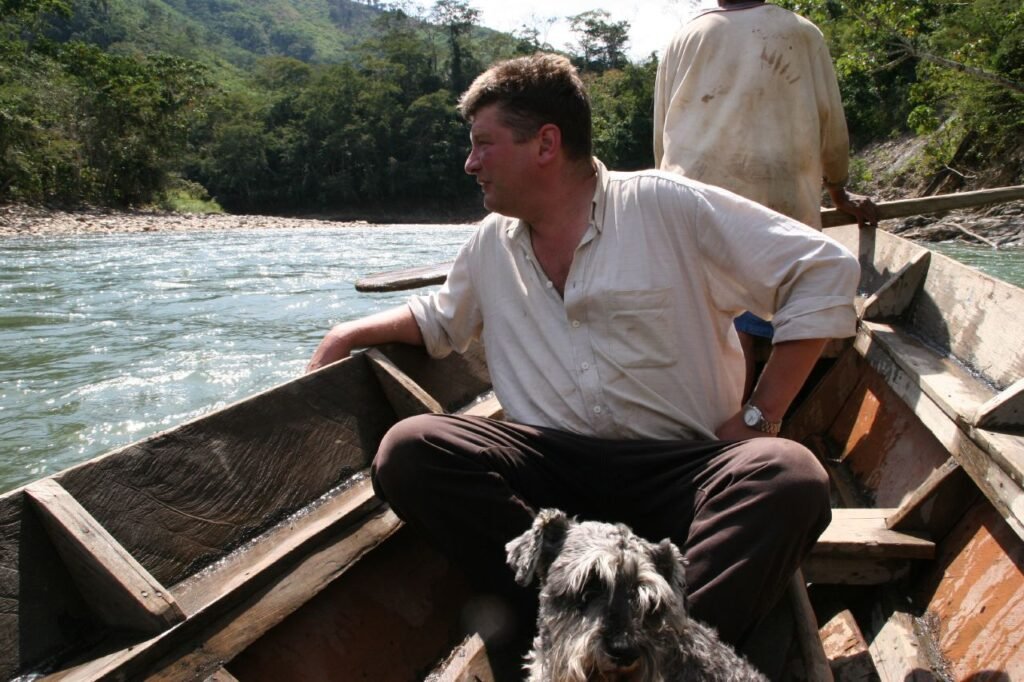
The second day of our trip took us even deeper into the wilderness. We traded our land vehicles for a small, canoe-sized boat to navigate the Rio Tipuani. This river is legendary in Bolivia; for centuries, it has been synonymous with gold.
Navigating a small boat up-river against the current is an art form. The boatmen know every eddy and every hidden rock. We were heading toward a specific geological feature—a “spalt” or a narrow split in the mountain where the river is squeezed between towering walls of stone.
For a photographer, this was the “Holy Grail” of the trip. The rapids surged through the narrow gap, creating a white-water chaos that contrasted beautifully with the rock. But the most striking detail was the vegetation. Huge ferns overhung the rapids, clinging to the vertical rock faces and dripping with the spray from the river. The light filtered down through the canopy, creating a prehistoric, “Lost World” atmosphere. It was a place of intense natural beauty, tucked away in a corner of the world that few travelers ever get to see.
Reflections on a Changing Landscape
The trip concluded with the long climb back up the mountainside to Coroico. Arriving back at the Hotel Esmeralda, looking out over the velvet-green ridges of the Yungas, the contrast was sharp. We had spent 48 hours in the grit, mud, and raw power of the mining camps, and returning to the “City of Eternal Spring” felt like returning from a different century.
Looking at these photos today, I am struck by how much has changed. My son Michael and Thomas’s kids have grown up; the mine we visited is buried under tons of earth; and the roads to Guanay are better than they used to be. Yet, the spirit of the region remains. The gold is still there, the rivers still roar, and the ferns still hang over the Tipuani rapids.
This 2006 expedition was more than just a weekend getaway. It was part of the foundation of what ViaAndinaTravel is today: a quest to document the routes, the people, and the fleeting moments of beauty in the high Andes and the deep valleys.
Recommended Reading
Bolivia: A Traveler’s Literary Companion: Immerse yourself in the diverse, magical landscapes of the Altiplano and Yungas before your journey. Pick up a copy of Bolivia: A Traveler’s Literary Companion on Amazon.
Technical Note for Photographers
The 2006 gallery was shot during a transition period in photography. The textures of the mining sites—the rusted machinery, the muddy river water, and the dark interiors of the mine—required careful exposure to maintain detail in both the shadows and the bright tropical highlights. You can see the full collection, including the shots of the cable cart and the Tipuani “spalt,” in high resolution on my Flickr page.
Explore the Guanay-Tipuani 2006 Photo Gallery here.
Stay Connected with Us
Let’s Create Together
Connect with us to explore how we can make your vision a reality. Join us in shaping the future.