Multilingual Blog:

🇺🇸English: The Evolution of the Bolivian Blockade: From CB Radios to Smartphones
A Story of Connectivity 📶
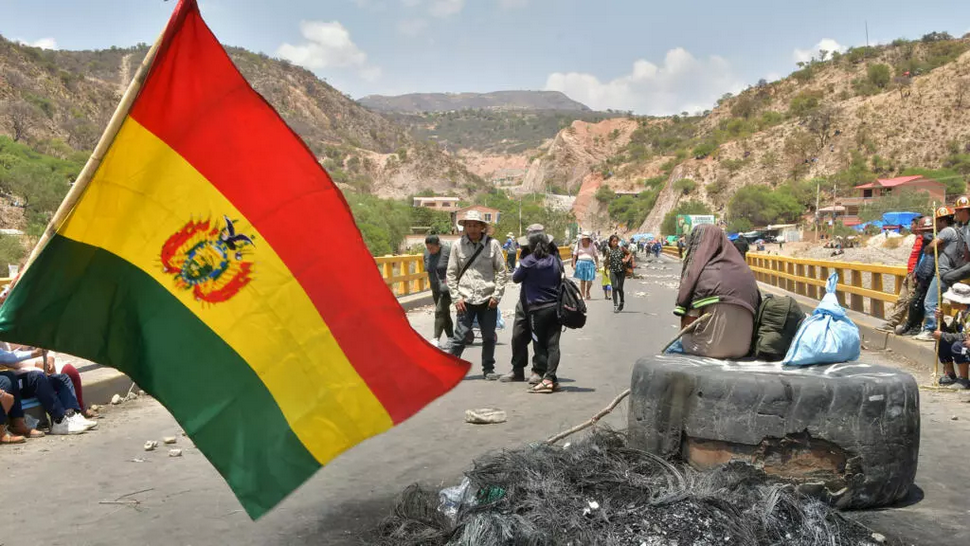
With the recent lifting of major blockades across Bolivia, it’s the perfect moment to look back at how this unique form of social protest has evolved. While \”el bloqueo\” has been a staple of Bolivian political life for decades, the mechanics of how they are organized—and how they affect the country—have been fundamentally transformed by the digital revolution.
The Pre-1994 Era: A Country of Islands 🏝️
Before the mid-90s, traveling through Bolivia was an exercise in patience and isolation. Moving between cities meant entering a total communications vacuum. If you needed to reach someone, you had two choices: wait in a long line at a physical ENTEL office for a landline connection, or rely on the static-heavy world of CB radios.
I lived this reality firsthand while living in Coroico. In 1991, when I started building the Hotel Esmeralda, the isolation was absolute. Back then, transport was incredibly scarce; during the 80s and early 90s, Coroico might only have one bus a day—or even just one a week. On Sundays, everything depended on the Flota Yungueña.
On any other day, travel was a true adventure. The journey began in La Paz, climbing over La Cumbre at a staggering 4,850m (approx. 15,900 ft), before descending the infamous \”Death Road.\” Often, the only way forward was to hitch a ride \”piggyback\” on huge, ancient trucks that likely didn\’t even have power steering. These heavy machines would rumble down to Yolosa, leaving you with the final, dusty 7 km (approx. 4.3 miles) drive up to Coroico.
In the Yungas, communication only happened at night. During the day, solar interference and atmospheric conditions made signals impossible. We would huddle around radios after dark, listening to the crackle and hiss, waiting for a window of clarity to send a simple message: \”We arrived safely\” or \”The road is washed out.\”
Transportation: The Wild West of the Road 🚌
Back then, transportation was far cheaper but completely unpredictable. Drivers of trucks and older buses operated like independent entrepreneurs. A trip wasn\’t just about getting from point A to point B; it was about the driver’s own \”side business.\” They would stop for hours to load unplanned freight, pick up roadside passengers for extra cash, or wait for a village market to finish. Because communication was so slow, a \”blockade\” was often just a rumor until you physically hit a pile of rocks in the middle of the highway.
The Digital Turning Point 📱
The rollout of the nationwide cellular network in 1994 was the beginning of the end for that isolation. Today, the \”blockade\” has been professionalized. What used to take days of runners and radio messages now happens in seconds via encrypted WhatsApp groups. Protesters no longer just block a road; they broadcast their movement live to the world, using smartphones to turn a local grievance into a national media event.
Impact on Tourism and the Power of Education 🎓
The modern efficiency of these protests has a dark side: the immediate strangulation of the tourism industry. Destinations like Uyuni and Copacabana—the crown jewels of Bolivian travel—suffer the most. Cancellations flood in the moment a \”tide of stones\” is reported on social media.
This is where Tourism Education becomes vital. By fostering a national understanding of tourism as a \”sustainable motor,\” citizens can begin to see that blocking a road doesn\’t just hurt the government; it destroys the livelihoods of the guides, hotel staff, and artisans in their own communities. Education can transform the blockade into a more nuanced form of civic engagement that protects the country\’s economic future.
🇩🇪 German: Von CB-Funkgeräten zu Smartphones

Die Entwicklung der bolivianischen Straßenblockaden 📶
Mit der jüngsten Aufhebung der großen Blockaden in Bolivien ist es der perfekte Moment, um darauf zurückzublicken, wie sich diese einzigartige Form des sozialen Protests entwickelt hat. Während „el bloqueo“ seit Jahrzehnten ein fester Bestandteil des politischen Lebens ist, hat die digitale Revolution die Mechanik ihrer Organisation grundlegend verändert.
Die Ära vor 1994: Ein Land aus Inseln 🏝️
Vor Mitte der 90er Jahre war das Reisen durch Bolivien eine Übung in Geduld. Wer die Stadt verließ, begab sich in ein Kommunikationsvakuum. Man war auf ENTEL-Büros oder CB-Funkgeräte angewiesen.
Ich habe diese Realität hautnah miterlebt, als ich in Coroico lebte. Als ich 1991 mit dem Bau des Hotels Esmeralda begann, war die Isolation absolut. In den 80er und frühen 90er Jahren gab es oft nur einen Bus am Tag nach Coroico – oder manchmal sogar nur einen pro Woche. Sonntags verließ man sich ganz auf die Flota Yungueña.
An allen anderen Tagen war die Reise ein echtes Abenteuer. Sie begann in La Paz mit dem Aufstieg über La Cumbre auf 4.850 m Höhe, gefolgt von der Abfahrt über die berüchtigte „Todesstraße“. Oft war die einzige Möglichkeit, auf der Ladefläche riesiger alter Lastwagen mitzufahren, die damals wahrscheinlich noch nicht einmal eine Servolenkung hatten. Diese schweren Maschinen rumpelten hinunter nach Yolosa, gefolgt von der letzten, staubigen 7 km langen Fahrt hinauf nach Coroico.
In den Yungas war Funkverkehr nur nachts möglich, wenn die atmosphärischen Bedingungen es zuließen. Tagsüber gab es schlichtweg kein Signal. Wir versammelten uns nach Einbruch der Dunkelheit um die Funkgeräte, hörten dem Knistern und Rauschen zu und warteten auf ein Fenster der Klarheit, um eine einfache Nachricht zu senden: „Wir sind sicher angekommen“ oder „Die Straße ist weggespült“.
Der Transport: Wilder Westen auf den Straßen 🚌
Der Transport war damals viel billiger, aber völlig unvorhersehbar. Lkw- und Busfahrer agierten als unabhängige Unternehmer. Eine Fahrt diente oft den privaten Geschäften des Fahrers – er lud spontan Fracht auf oder wartete stundenlang auf Passagiere, um sich etwas dazuzuverdienen. Da die Kommunikation so langsam war, war eine Blockade oft nur ein Gerücht, bis man physisch vor einem Steinhaufen auf der Autobahn stand.
Der digitale Wendepunkt 📱
Die Einführung des Mobilfunknetzes im Jahr 1994 änderte alles. Heute ist der Protest professionalisiert. Koordination geschieht in Sekunden über WhatsApp-Gruppen. Informationen werden als Medienwaffe eingesetzt, und die wirtschaftlichen Auswirkungen sind in den städtischen Lieferketten sofort spürbar.
Auswirkungen auf Tourismus und Bildung 🎓
Blockaden treffen Ziele wie Uyuni und Copacabana hart. Sobald soziale Medien über Unruhen berichten, folgen Massenstornierungen. Hier ist Tourismusbildung entscheidend: Wenn die Bürger den Tourismus als Motor für nachhaltige Entwicklung verstehen, erkennen sie, dass Blockaden nicht nur die Regierung treffen, sondern die Existenzgrundlage ihrer eigenen Gemeinschaft zerstören.
🇨🇱 Spanish: De Radios CB a Smartphones

La Evolución del Bloqueo en Bolivia: Un Cuento de Conectividad 📶
Ahora que por fin se soltaron los medios tacos y bloqueos en Bolivia, es el momento justo para cachar cómo ha cambiado esta forma de protesta. El \”bloqueo\” ha sido parte de la pega política boliviana por décadas, pero la tecnología cambió toda la movida; ahora se organizan de una forma que deja la escoba en todo el país gracias a la revolución digital.
La Era Pre-1994: Un País de Islas 🏝️
Antes de mediados de los 90, viajar por Bolivia era quedar totalmente desconectado. Si querías avisar algo, tenías que hacer tremendas colas en las oficinas de ENTEL o encomendarte a las radios CB.
Viví esa realidad en carne propia cuando vivía en Coroico. En el \’91, cuando empecé a construir el Hotel Esmeralda, la desconexión era total. En los 80 y principios de los 90, el transporte era súper escaso: llegaba una pura micro al día a Coroico, o incluso una a la semana no más. Los domingos, la que salvaba el día era la Flota Yungueña.
Los otros días la cuestión era una aventura de aquellas. Partías en La Paz y cruzabas La Cumbre a 4.850 metros, para después bajar por el famoso \”Camino de la Muerte\”. Muchas veces la única forma de moverse era ir \”al apa\” en camiones gigantes y viejos que en ese tiempo ni dirección hidráulica tenían. Esas máquinas pesadas bajaban hasta Yolosa, y de ahí te quedaba el último pique de 7 km para subir a Coroico.
En los Yungas, la cuestión era brígida: en el día no había señal por la interferencia solar, así que la comunicación era solo nocturna. Nos juntábamos alrededor de la radio en la noche, entre puros ruidos y estática, esperando que la señal se pusiera \”bacán\” para avisar que habíamos llegado bien o que el camino estaba cortado.
El Transporte: Puro \”Lejano Oeste\” 🚌
En ese tiempo, viajar era mucho más barato pero más incierto que la fregar. Las micros y camiones eran como el negocio propio de los choferes; se paraban en cualquier lado a cargar fletes no programados o a subir pasajeros por fuera para ganarse unas lucas extra. Como no había celulares, uno no sabía si había bloqueo hasta que llegaba al lugar y veía las tremendas piedras en medio del camino.
El Punto de Inflexión Digital 📱
Desde el 94, cuando se instaló la red de celulares, la cosa cambió del cielo a la tierra. Ahora los bloqueos se coordinan al tiro por grupos de WhatsApp. Ya no es una cuestión espontánea; ahora graban todo con el smartphone y lo suben a las redes, convirtiendo un problema local en un evento mediático nacional en segundos.
Impacto en el Turismo y la Educación 🎓
Es una lata que estos bloqueos afecten tanto a destinos tan bacanes como Uyuni y Copacabana. Apenas sale un video de una carretera cortada, las cancelaciones llegan de a montones. Por eso, la educación turística es clave. Si la gente cacha que el turismo es un motor de desarrollo de verdad, van a entender que cerrar los caminos no solo le pega al gobierno, sino que le echa a perder la vida a los guías y artesanos de su propia gente. Hay que cambiar el chip para proteger el futuro.
🇧🇴 🇺🇸 🇬🇧 🇩🇪 🇨🇱 Conclusión / Conclusion / Fazit The signals are always on now—even if the roads aren\’t. 📡 📶 🚫 🛣️ 🚌 📱 🗺️ 🏔️ 📢 para proteger el futuro.
🇧🇴 🇺🇸 🇬🇧 🇩🇪 🇨🇱 Conclusión / Conclusion / Fazit The signals are always on now—even if the roads aren\’t. 📡 📶 🚫 🛣️ 🚌 📱 🗺️ 🏔️ 📢
#Bolivia #RoadBlockades #Digitization #Telecommunications #Tourism #Sustainability #Uyuni #Copacabana #Education #History
#Bolivia #Bloqueos #Tacos #Telecomunicaciones #RevoluciónDigital #TurismoSustentable #Pega #EducaciónTurística #Uyuni #Copacabana #Bolivien #Straßenblockaden #Digitalisierung #Telekommunikation #Tourismus #Nachhaltigkeit #Uyuni #Copacabana #Bildung #Geschichte